In May 2015, shortly after my 40th birthday, I made a decision.
I was going to freeze my eggs.
It wasn’t surrender. I hadn’t given up on meeting Mr Right. I simply wanted a little more time: time to find him, and time to become a mother the way I’d always pictured it.
My twenties and thirties had gone on other things. Building a career. Seeing the world. Saying yes to life. Motherhood sat quietly on the horizon, the way it does when you assume it will wait for you.
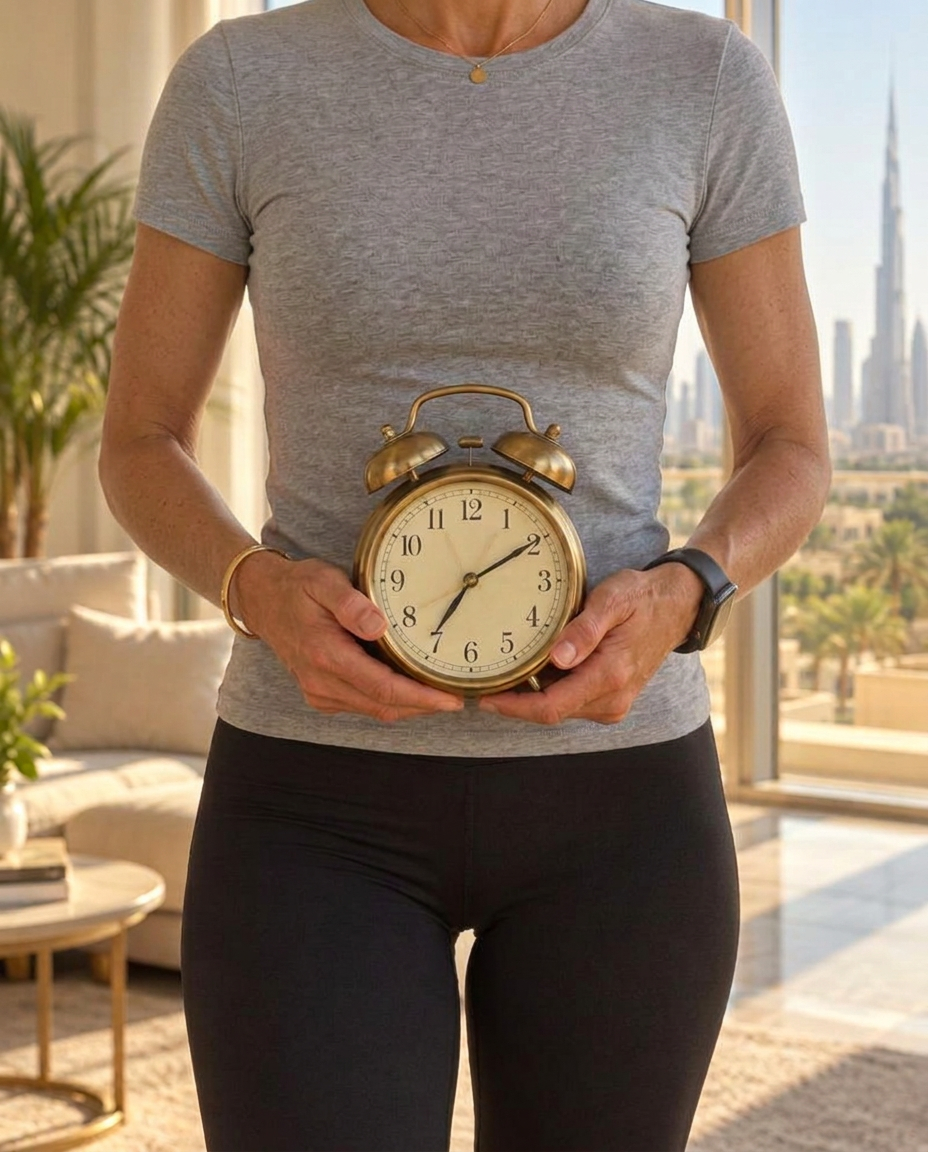
Then the biological clock I’d been so cheerfully ignoring began to tick louder. Loud enough that I could no longer pretend not to hear it.
So I decided to do something about it.
I was fit. I was healthy. I trained, I looked after myself. Freezing my eggs, I reasoned, would be a formality. A box to tick.
I could not have been more wrong.
The Test That Changed Everything
A little online research told me where to start: an AMH test.
AMH stands for Anti-Müllerian Hormone. It’s a blood test that gives an indication of ovarian reserve, roughly how many eggs a woman may have left. It can’t tell you whether you will or won’t get pregnant, but it’s an important piece of the puzzle when you’re considering treatment.
Simple, I thought. One blood test. One result. One plan.
The result came back at 0.1 ng/mL = Very low. Barely detectable.
Nothing like the number I’d been expecting.
I remember the panic arriving first. Then the shock. Then a stubborn, almost indignant disbelief.
How could it be that low? I was healthy. I exercised. I looked after myself. There had to be a mistake.
Perhaps it was because I’d only just come off the birth control pill after five years.
Perhaps the lab had got it wrong.
Perhaps I just needed to take it again.
Perhaps… perhaps… perhaps…
I was grasping for any explanation that didn’t mean what I was most afraid it meant.
Because in the light of that one number, the time I thought I’d bought myself looked very different.
What if I’d already run out of time?
Finding Answers
I needed answers, and I needed them fast.
I’d assumed the hard part would be deciding to freeze my eggs. It had never occurred to me that actually being able to freeze them might be harder still than the decision to do it.
And then there was where I lived.
At the time, fertility treatment for unmarried women in the UAE had restrictions. Pursuing motherhood as a single woman wasn’t an option as far as I knew. I wasn’t even sure what I could/couldn’t ask.
Which left me facing questions I had no idea how to answer.
Should I leave the country I’d made my home to have treatment somewhere else?
Could I find a doctor in the UAE who would sit down with me and properly explain my options?
And where on earth did I begin, when I didn’t yet know what I didn’t know?
There was privacy to think about, too. Egg freezing was slowly finding its way into conversation in other parts of the world, but as a single woman trying to preserve her fertility in the Middle East, I felt as though I was setting out with no map to follow.
That is a big part of why I chose to stay anonymous. I wanted to tell the truth without worrying what it might cost me, personally or professionally. And I wanted to talk about the things that so often only get whispered behind closed doors.
The appointments.
The confusion.
The highs, and the lows that knock you sideways.
The decisions.
The costs.
And the sheer, exhausting amount of research it took just to understand what my choices were.
What I Wish I'd Known
If I’d known in my twenties what I know now, I truly believe I’d have made some very different decisions.
Not necessarily about my career, my relationships or where I chose to build my life.
But certainly about my fertility.
I wish someone had sat me down and explained what age really does to it.
I wish I’d learned about egg freezing years before I turned 40.
And I wish I’d understood that being fit, healthy and active is no guarantee. You can do everything right and still find your ovarian reserve telling a very different story.
Some of what I’ve been through was unavoidable. Some of it, I believe, was made harder than it needed to be by a lack of information, a lack of understanding and, at times, a lack of compassion.
Yes, my own ignorance included.
Along the way I’ve also met a handful of truly wonderful healthcare professionals, people whose kindness carried me further than they’ll ever know.
But I can’t shake the feeling that it shouldn’t have been this hard to find my way.